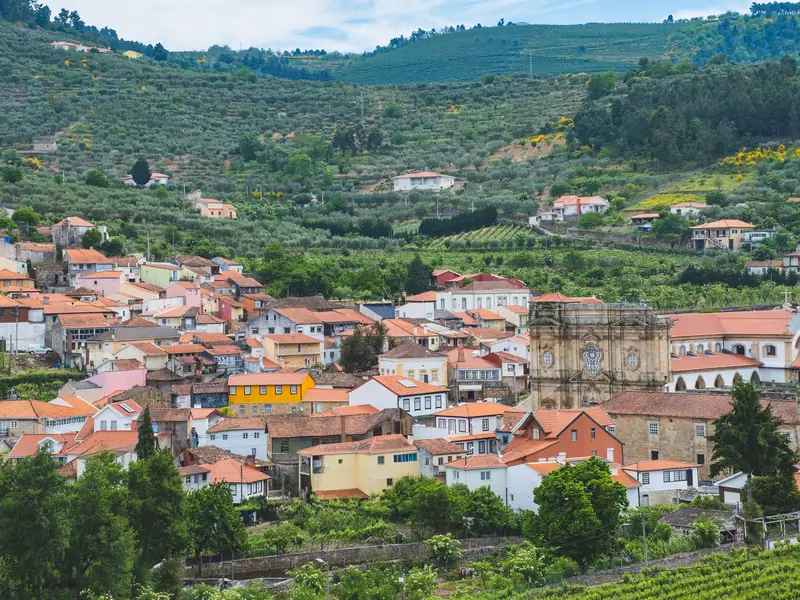
Casa do Sino sits in the middle of a valley that once held three Cistercian monasteries and a bridge where you paid a toll to enter. Almost everything worth seeing is under half an hour away, and a good deal of it has neither ticket office nor queue.
This is what we do with the people who stay, depending on how long they have and the time of year. In summer the answer is almost always water; in autumn, the hills. And there are views that repay the drive on their own.
Three Cistercian monasteries in one valley, a bridge with a tower, the manor of Egas Moniz with the sparkling wine museum, a sanctuary at the top of 686 steps, the cathedral and the theatre in Lamego, and the masks of Lazarim. Nearly all of it within half an hour.
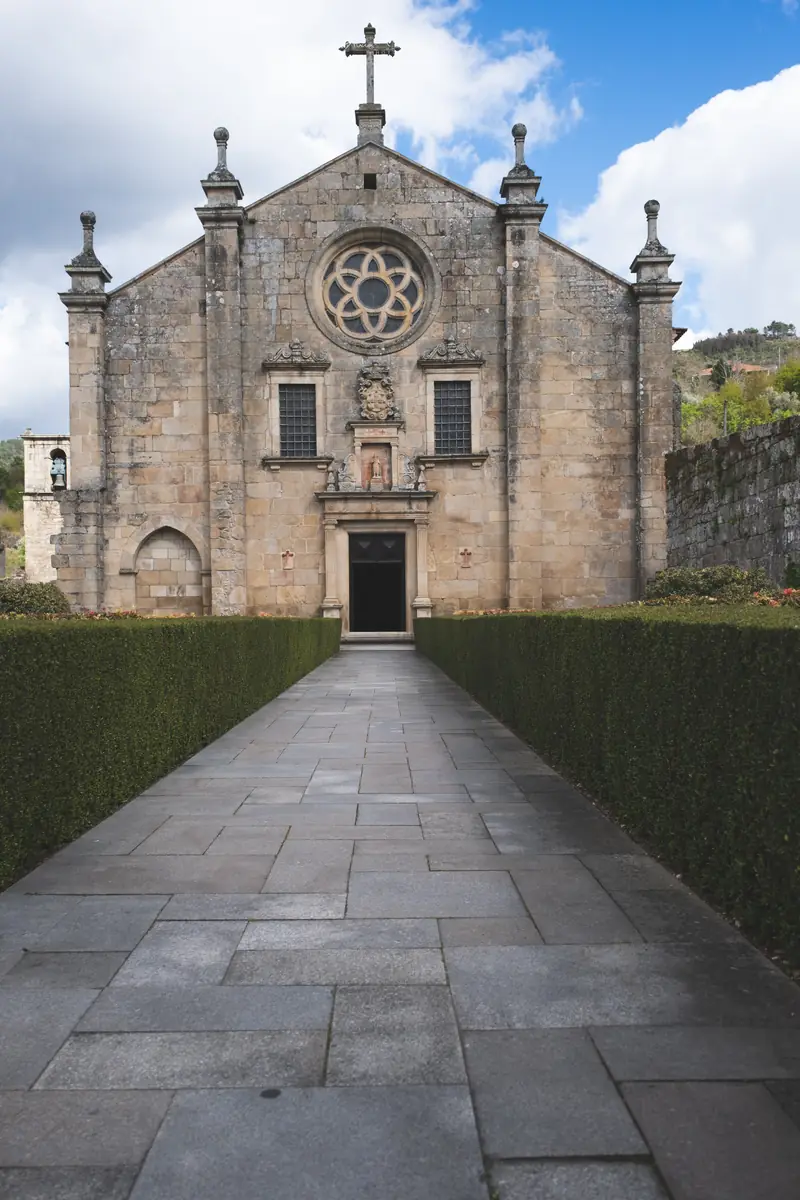
Igreja Matriz de Tarouca
Tarouca, walkable from the house
The first record of it dates from 1163, and tradition holds it was the seventh church founded in Portugal. What stands today is thirteenth century, on the cusp between Romanesque and Gothic, with Manueline and Baroque additions. The façade is austere granite, with a triple cross at the top. Inside, the chancel has thirty painted seventeenth-century panels and the tomb of the first Count of Tarouca.
What not to miss: the main doorway, with its carved columns, and the painted ceiling panels of the chancel.
Good to knowIt is not always open. If you find it closed, the façade and the doorway are worth the stop on their own
ListedClassified as a building of public interest since 1948
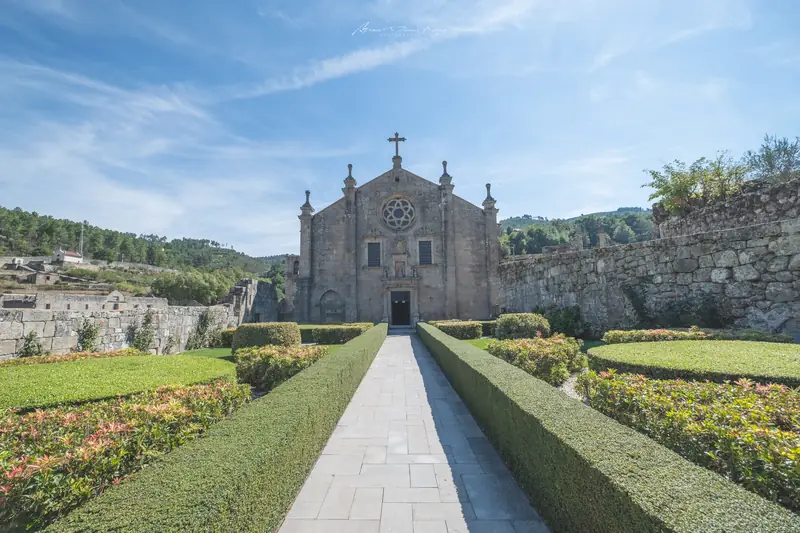
Mosteiro de São João de Tarouca
São João de Tarouca, a few minutes away
The first Cistercian monastery built in Portugal, at the bottom of the valley with the hills behind it. Founded in the twelfth century, and it is still obvious why they chose the spot: the silence there does not need explaining. Excavations have laid bare what remains of the cloister and the monks' quarters.
What not to miss: the tomb of the Count of Barcelos and the painting of Saint Peter, inside the church.
HoursTuesday to Sunday, 10 a.m. to 1 p.m. and 2 p.m. to 6 p.m.
Admission3 euros. There is a combined ticket with Salzedas and Ucanha, valid seven days
Mosteiro de Santa Maria de Salzedas
Salzedas, in the same valley
The second of the great Varosa monasteries, and the most imposing on arrival. The façade is enormous for the village around it, and that contrast is half the effect. Salzedas itself, its houses leaning against the monastery, is worth the twenty-minute walk around it.
What not to miss: the loop through the village afterwards, which almost nobody does.
HoursTuesday 2 p.m. to 6 p.m., Wednesday to Sunday 10 a.m. to 1 p.m.
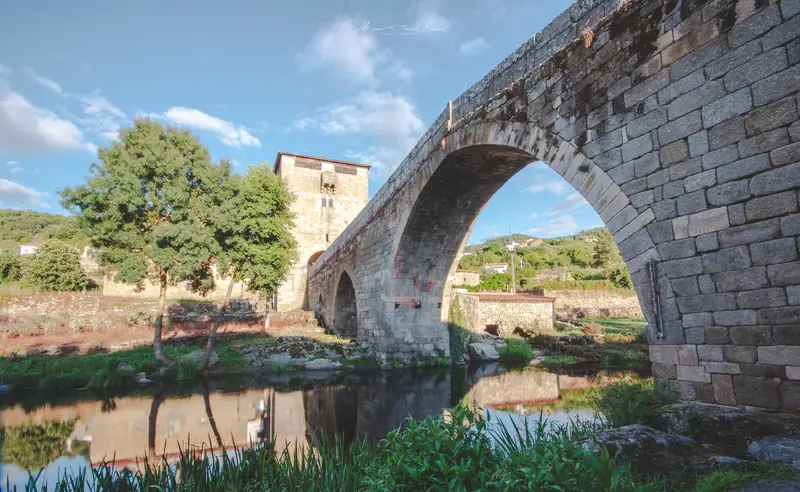
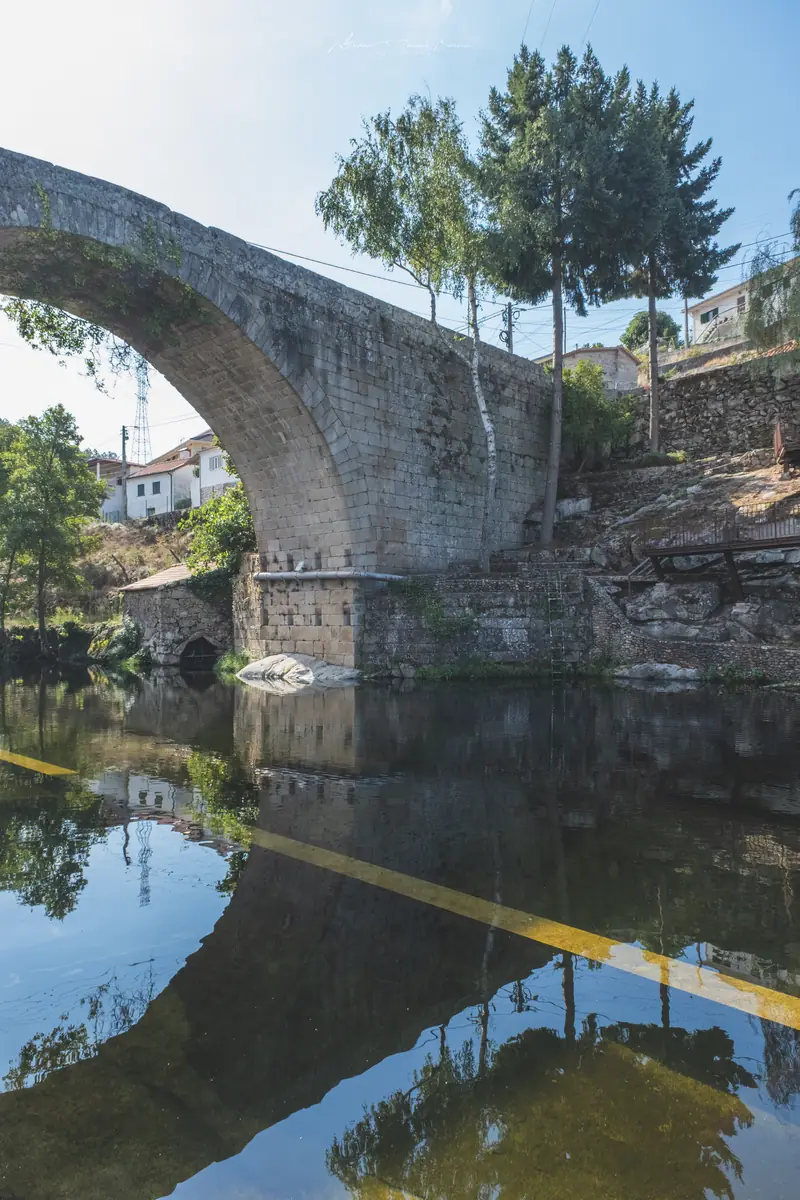
Ponte e Torre Fortificada de Ucanha
Ucanha, over the Varosa
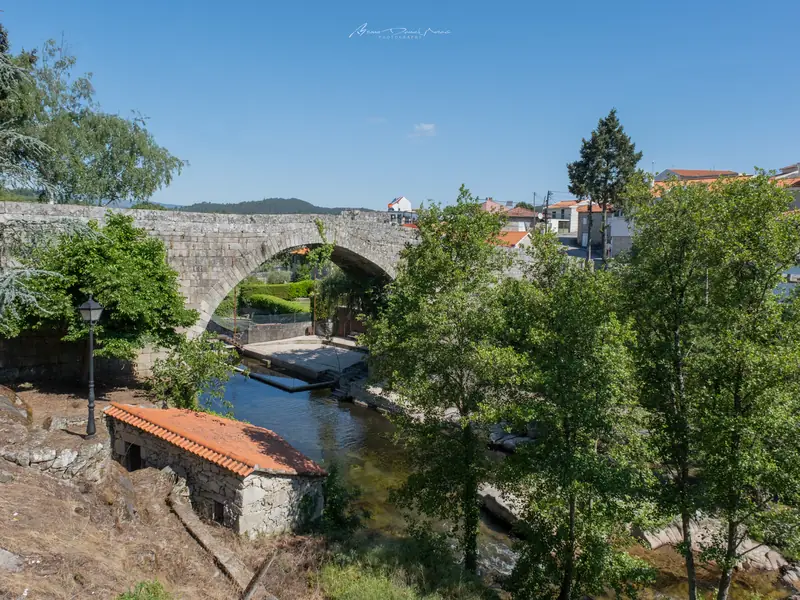
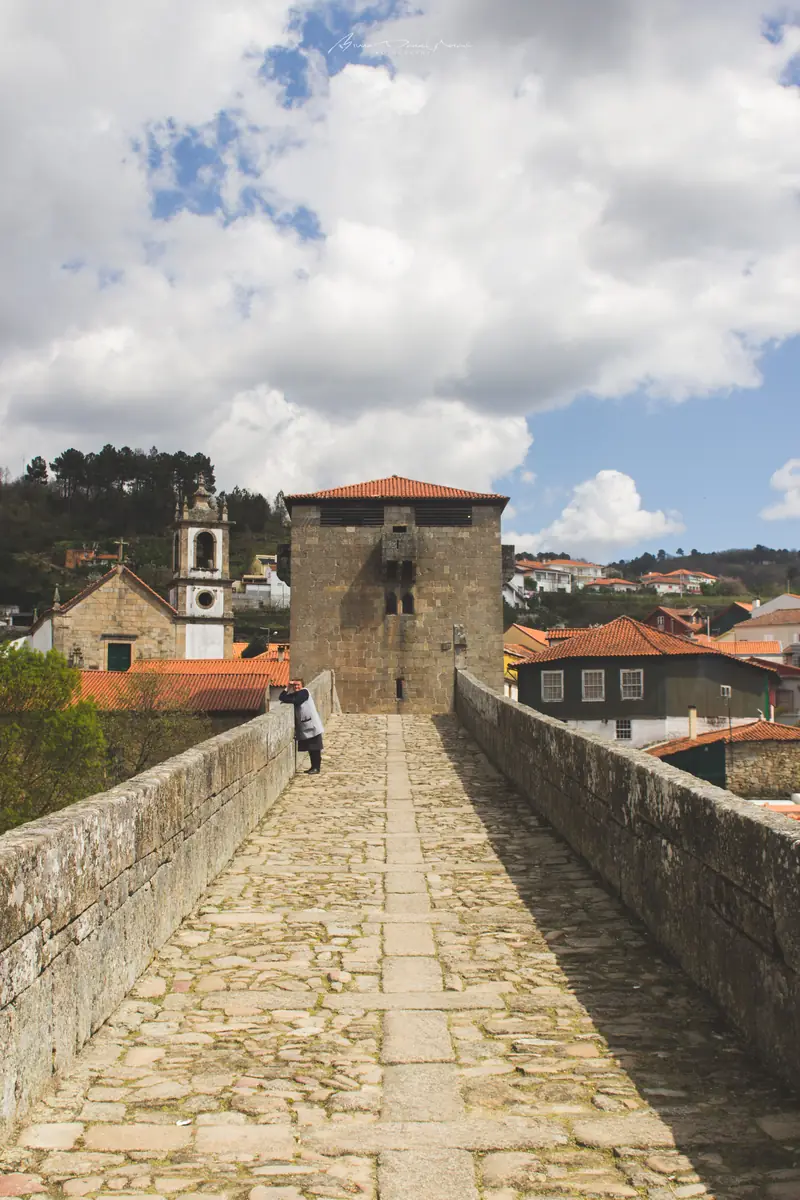
A medieval bridge with a tower on top, built because this is where the toll was collected to enter the monastery's lands. It is the most photogenic monument in the area and one of very few of its kind left in the country. The river runs beside it, and in summer people swim right underneath.
What not to miss: climbing the tower, then seeing it from below, from the bank.
HoursTuesday to Sunday, 10 a.m. to 1 p.m. and 2 p.m. to 6 p.m.
Good to knowIt is a step away from the Gouviães restaurants
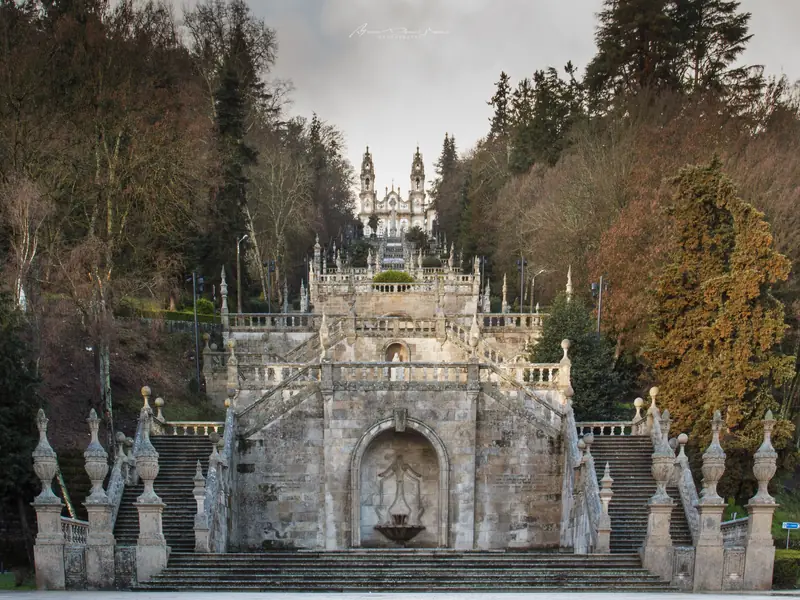
Santuário de Nossa Senhora dos Remédios
Lamego, above the town
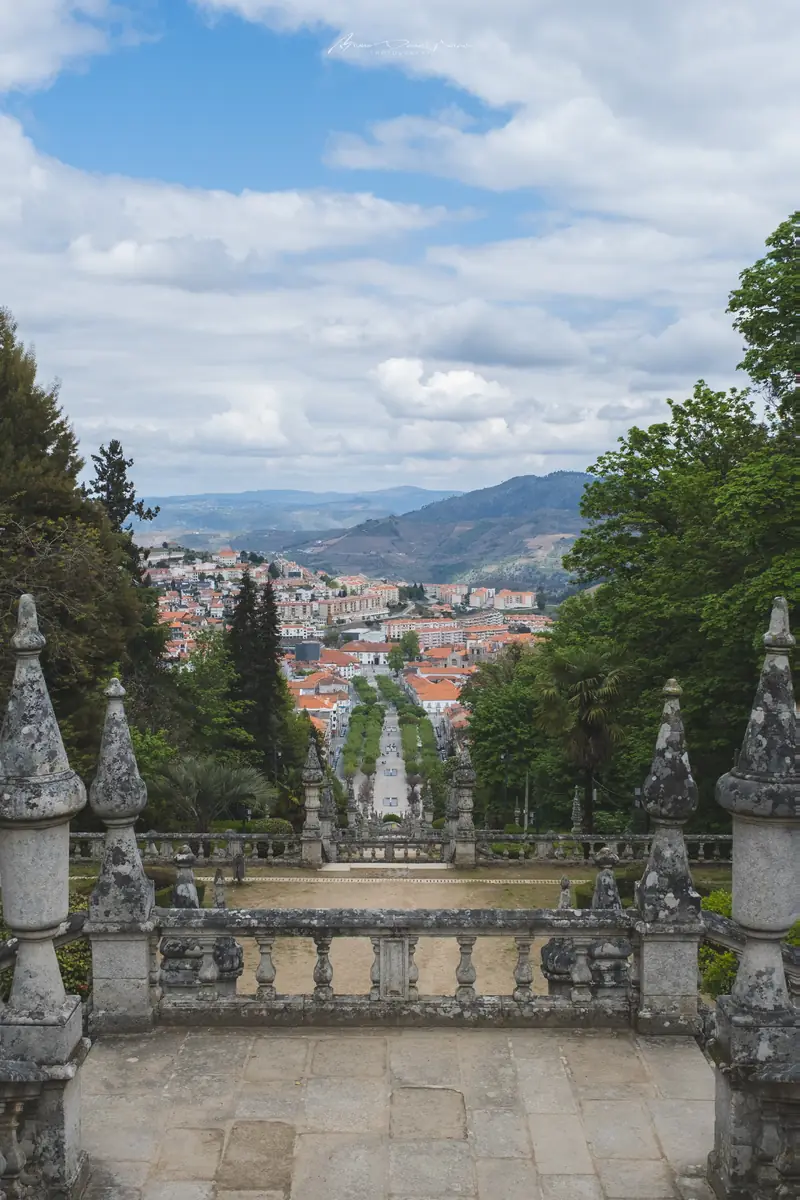
Lamego's calling card, and rightly so. The sanctuary sits at the top of a stairway of 686 steps in nine flights, with fountains, chapels and obelisks along the way. Halfway up is the Pátio dos Reis, with the statues of the eighteen kings of Israel. If you would rather not climb, you can drive to the top.
What not to miss: walking down even if you drive up, because the view only works downhill.
Good to knowThe pilgrimage runs from late August to 8 September. There is nowhere to park then
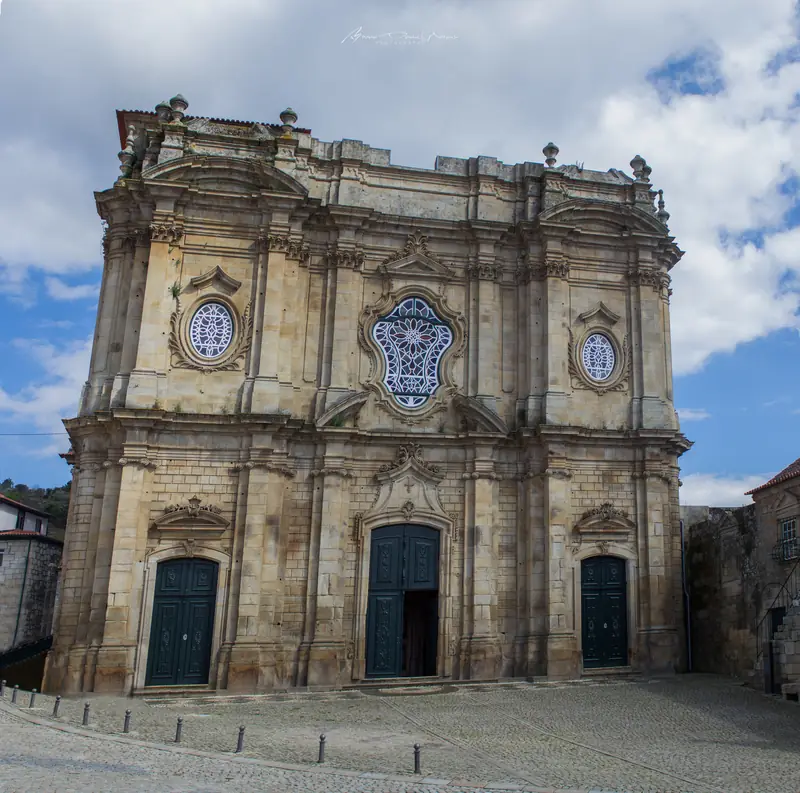
Sé de Lamego
Lamego, on the Largo da Sé
Work began in the mid-twelfth century, with Afonso Henriques, Portugal's first king, helping to pay for it, and it was consecrated in 1175. It is a church built across several ages, and you can read them from the outside in: the square tower is what remains of the medieval building, the façade is Gothic from the early sixteenth century, the cloister is Renaissance, from 1524, and the interior was remade in the eighteenth century.
What not to miss: the Renaissance cloister, the quietest part of the cathedral.
Good to knowIt is a working church: it closes over lunch, and services come first
Next doorThe Museu de Lamego and the Teatro Ribeiro Conceição are two minutes away on foot
Museu de Lamego
Lamego, in the old Bishop's Palace
One of the richest museums in inland Portugal, founded in 1917 in the old Bishop's Palace beside the cathedral. It has a room of sixteenth-century Flemish tapestries, paintings by Grão Vasco made for the cathedral itself, and whole baroque chapels, brought from convents in the region and rebuilt inside with their gilded woodwork and tiles.
What not to miss: the tapestry room and the Grão Vasco panels.
Please noteClosed for renovation since May 2025, with no reopening date yet. Check the museum's website before going
In summerEven while closed, it has been running outdoor events in the courtyard
Teatro Ribeiro Conceição
Lamego, on the Largo de Camões
Behind an eighteenth-century façade, once the front of the Misericórdia hospital, sits the hall the region counts as the most beautiful in the Douro. The hospital burned in 1897, José Ribeiro Conceição bought the ruins in 1924, and the theatre opened in 1929. It closed in the 1980s, half in ruins, and reopened, restored, in 2008. If there are tickets for anything on a night you are here, go: the hall is worth it, whatever is on.
A tip: checking the programme before you come, and buying as soon as you decide.
Box officeTuesday to Sunday, 2 to 7 p.m., and until 10 p.m. on performance days
Centro Interpretativo da Máscara Ibérica
Lazarim, in the old Viscounts' house
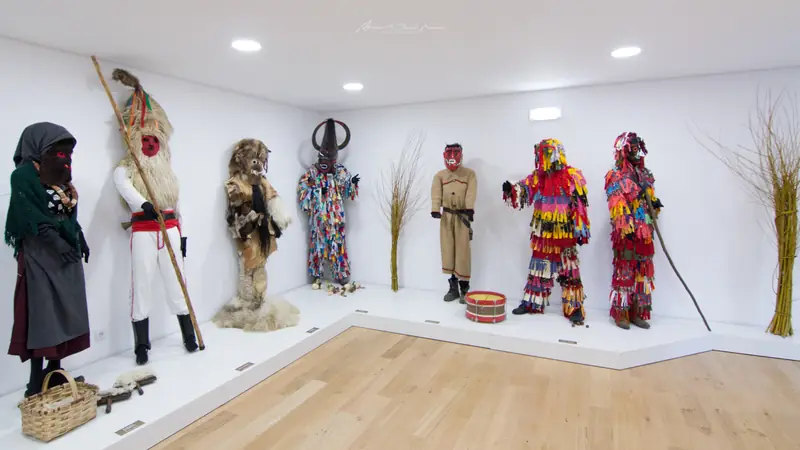
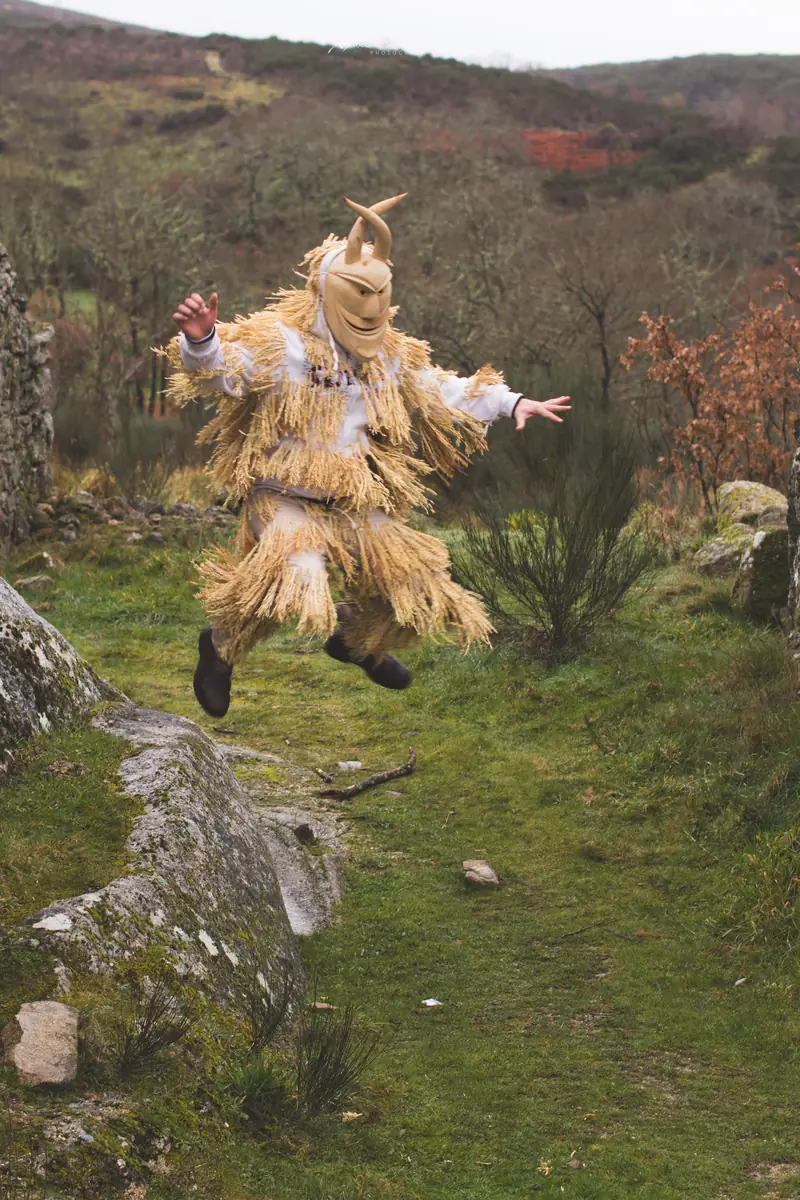
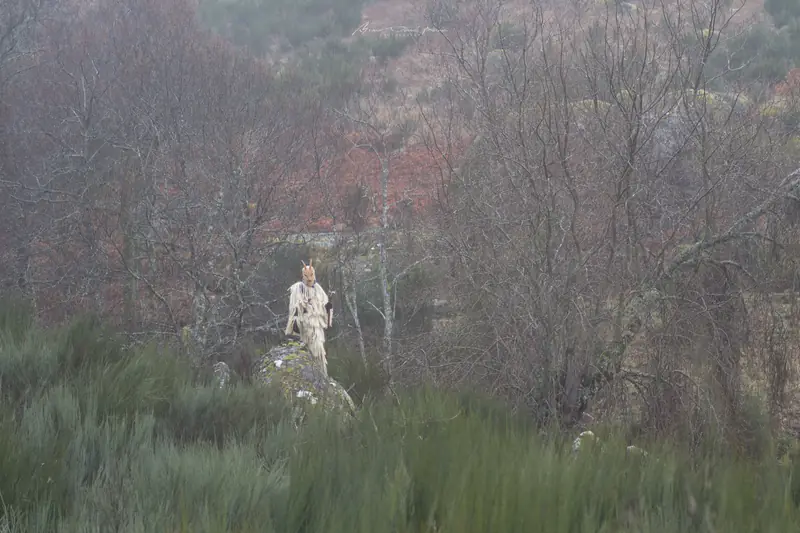
Lazarim carves alder-wood masks for its carnival, and has done so for longer than anyone living there can remember. The centre occupies the old manor of the Viscounts and explains the Iberian mask region by region, with particular attention to the village's own Entrudo and to the people who make it, the carvers and the seamstresses.
What not to miss: going outside carnival season, which is when you can actually look properly.
HoursTuesday to Sunday. 10 a.m. to 7 p.m. April to September, 10 a.m. to 4.30 p.m. October to March
AdmissionFree
Caves da Murganheira
Ucanha, cut into the rock
Sparkling wine made here since 1947, in cellars dug out of blue granite, which holds on its own the temperature and humidity the bottles need. Around a million bottles a year, and the visit takes you down among them. It ends with a tasting, and it is one of the easiest visits to fit into a short afternoon.
What not to miss: the tasting at the end, and take a bottle, which costs less here.
HoursMonday to Saturday at 9.30, 10.30 and 11.30 a.m. and at 2.30, 3.30 and 4.30 p.m.
ClosedSundays and public holidays
Good to knowThe visit lasts half an hour. Call ahead to book a time
Casa do Paço de Dálvares
Dálvares, five minutes by car
A medieval manor of dark granite, square in plan with a courtyard at its centre, once the seat of the honra of Dálvares and the property of Egas Moniz, tutor to Portugal's first king. It was a working farm until the 1960s, spent decades falling down, and the town hall bought it in 1994 and restored it. Today it houses the Museu do Espumante, which shows how sparkling wine was made by hand from the harvest to the bottle, and it is the seat of the Confraria do Espumante: the Varosa valley was the country's first demarcated sparkling wine region.
What not to miss: pairing it with the Caves da Murganheira, five minutes away: the museum first, then the tasting.
Good to knowWorth calling ahead, especially on public holidays
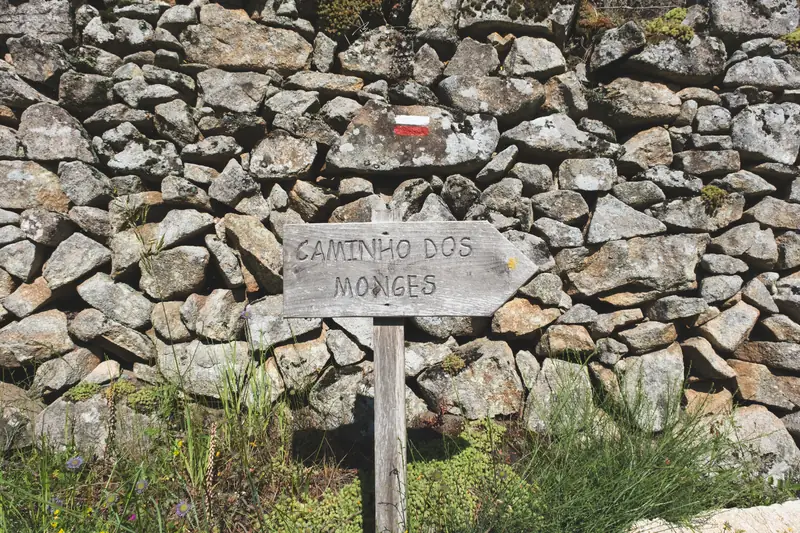
On footThe Caminho dos Monges passes a hundred metres from the door
The views
Three viewpoints worth the trip on their own, and one of them is visible from the house. And the Douro seen from the historic train, right beside the river.
Miradouro do Morro da Alcácima
Tarouca, above the town, walkable from the house
It is the widest view you can get without leaving town, and the easiest of all: you walk up, along Rua das Flores from the parish church. At the top of the hill, right opposite the town hall, the whole circle opens over Tarouca and the vineyards of the valley. Up there stand a hexagonal arcaded bandstand and the chapel of Nossa Senhora dos Prazeres.
When to go: going up at the end of the day, when the whole circle takes on colour.
The climbOn foot up Rua das Flores from the parish church. There are steps at the end
Good to knowIt is the only view on this list you can reach without a car
Serra de Santa Helena
Tarouca, at 1,102 metres
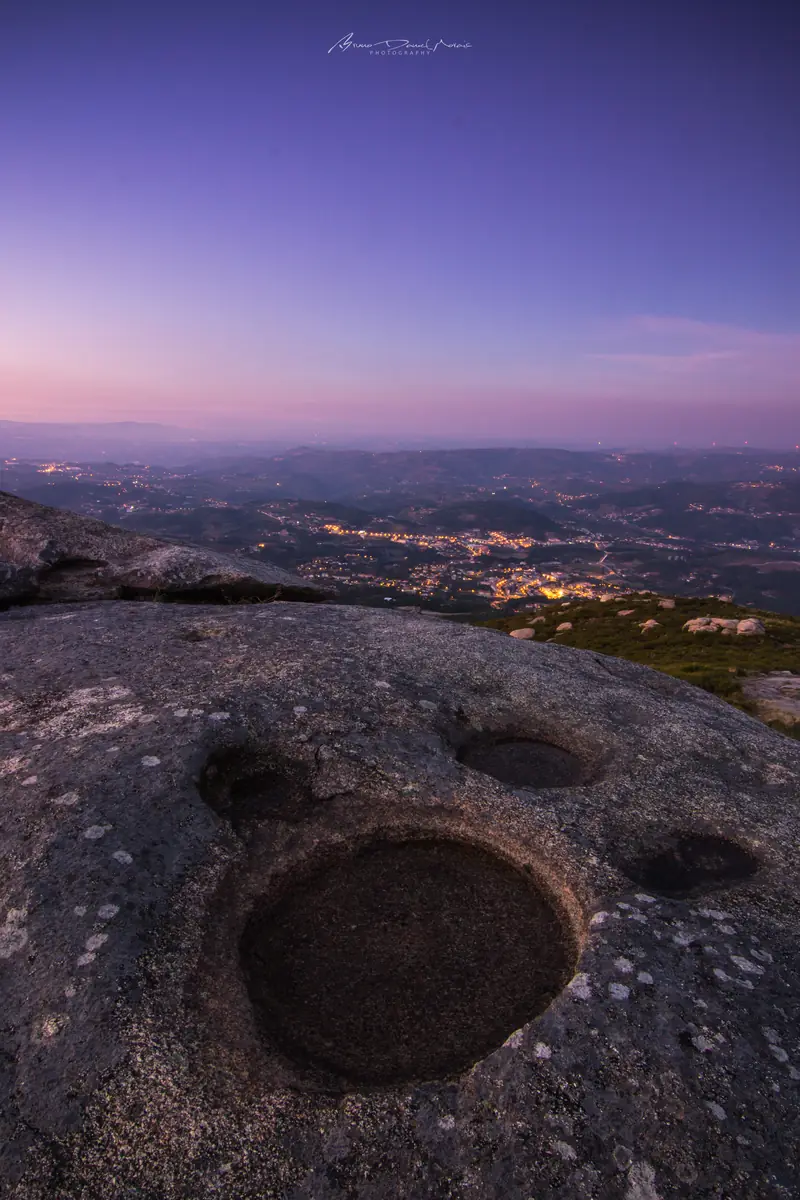
This is the mountain you see from the house, seen from the other side. From the top the whole Varosa valley opens up, with Tarouca and Lamego below, and in the distance the Marão, Meadas and Estrela ranges. At the summit there is an altar and a small chapel to Santa Helena da Cruz, and shaded picnic tables.
When to go: late afternoon, when the light falls across the valley. And on a foggy day it is a must: there is a good chance of climbing out above the clouds and finding sun on top of them.
Good to knowYou can drive all the way up, and there are picnic tables
AlsoThis is where the paragliders launch from
Miradouro de São Leonardo de Galafura
Galafura, Peso da Régua, at 640 metres
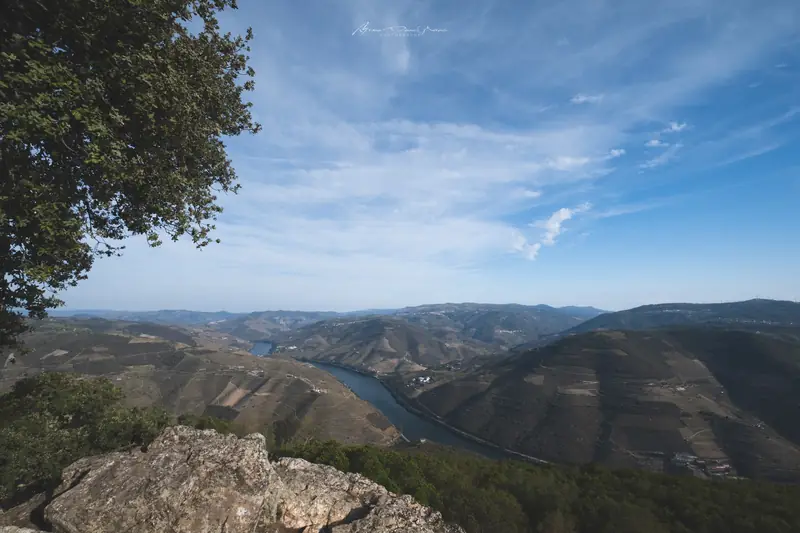
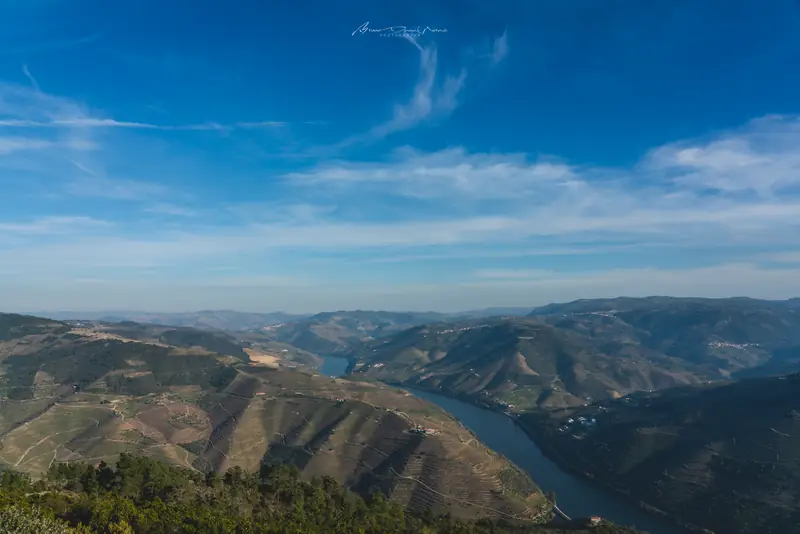
Miguel Torga called it the sublimated Douro and an excess of nature, and wrote it a poem. An extract is carved into a stone right there, and you read it with the valley in front of you, which is how it should be read. Torga was born a few kilometres away, in São Martinho de Anta. For many people this is the finest view over the wine country, and it sits halfway between Régua and Pinhão.
When to go: arriving near a mealtime, because the São Leonardo restaurant right there justifies the trip on its own. And reading the poem on the stone before you look down.
Good to knowYou can drive right up to it. There is a chapel and some shade
Casal de Loivos, pela estrada do Pinhão
Casal de Loivos, Alijó, above Pinhão
Here half the reason to go is the road itself. The stretch of the N222 between Régua and Pinhão has been called the most beautiful road in the world, and it is taken slowly, with the river always at your side. At the end you climb up to Casal de Loivos, a village six kilometres from Pinhão, and reach the balcony that looks down on the elbow bend the Douro makes below. The BBC placed this landscape among the six most beautiful in the world.
When to go: late afternoon, with the sun low across the terraces. In September, during the harvest, it is another thing entirely.
Good to knowIt is a half-day outing, and the road is narrow and full of bends
SuggestionDrive out along one bank and back along the other, they are different landscapes
Do not missPinhão railway station, with its Douro tile panels
Comboio Histórico do Douro
Régua station, half an hour by car
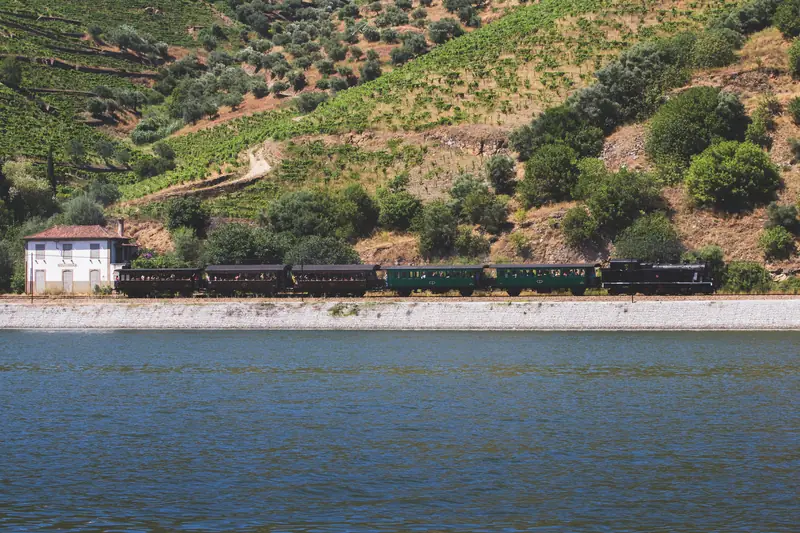
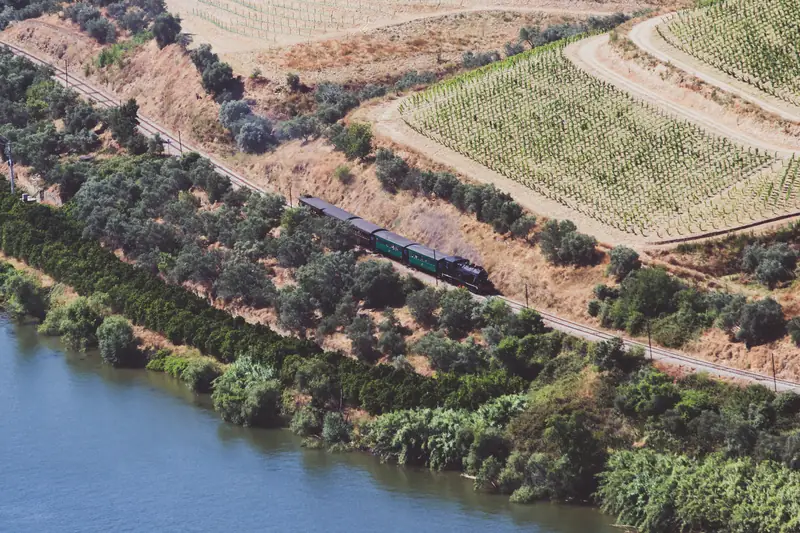
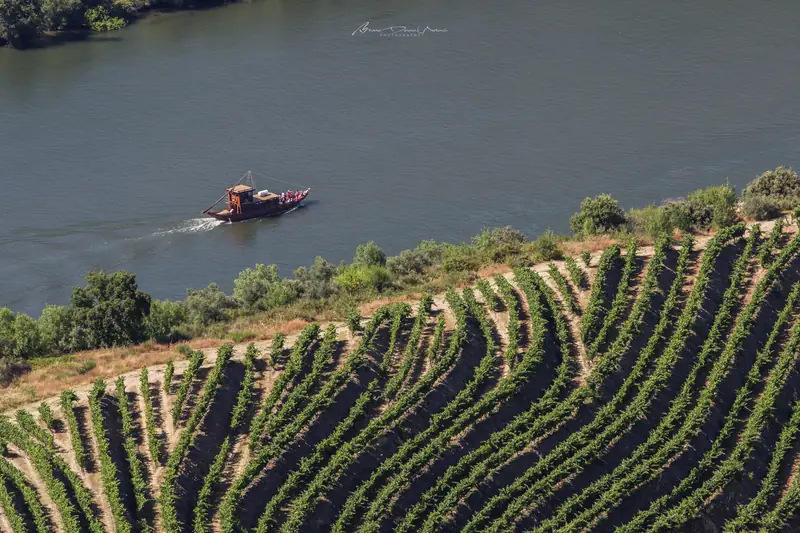
Five carriages from the early twentieth century, pulled by a diesel locomotive in its original colours, climbing the Douro line from Régua to Tua and back. The line hugs the river, on the bank opposite the N222, and the terraces run down to the water right beside the window. The trip starts with music and a glass of Port at Régua station, there is music on board, and it stops at Pinhão and Tua, where you can taste and buy local produce.
A tip: sit on the river side, which on the way out is the right. The other side is mostly hillside.
AddressEstação da Régua, Largo da Estação, 5050-280 Peso da Régua
WhenJune to October, on Saturdays and Sundays, and on Wednesdays in summer
DurationAbout three hours, from Régua, in the afternoon
TicketPaid, and not cheap. Buy it from CP online or at the ticket office, ahead of time; it cannot be exchanged or refunded. This year's price and times are on the CP website
The locomotiveThe one in the photo, from 2016, is the steam engine. In 2026 CP uses a diesel, in its original colours
Water, open air and children
From June to September this is where the afternoons go. And the wildlife park is good all year round.
Parque Ribeirinho de Tarouca
Tarouca, walkable from the house
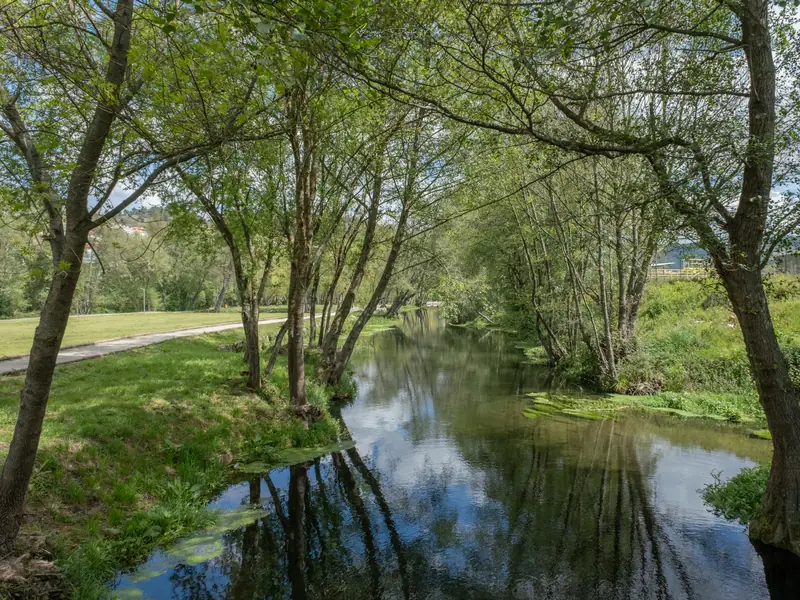
Seven and a half hectares along the Varosela and the Torno, and the place where children wear themselves out without noticing. In summer the park pool opens, outdoors and surrounded by green, which is where hot afternoons go without leaving town. The rest of the year there is a playground, a skate park, a multi-sport court, mini-golf, an outdoor gym and a picnic area. You can paddle a canoe on the Varosela, and there are horses.
Good for: a whole afternoon with no plan, which is what the place is for.
PoolSummer only, with a small entry fee. This season's hours are on the town hall website
Good to knowThis is where the VarosaFest happens, in August
Piscinas Municipais Descobertas de Tarouca
Tarouca, in two places
They open for the summer and there are two: one inside the Parque Ribeirinho and another at the sports complex. They are the simple answer to a hot afternoon without leaving town, and they cost far less than any alternative.
Good for: the Parque Ribeirinho one, if you have small children.
AddressParque Ribeirinho e Complexo Desportivo Municipal, Tarouca
A different scale altogether. Five pools, a small water park, slides, a pool for the little ones, a beach volleyball court and a bar with outdoor seating. This is where you go when the day is genuinely hot and you want something that lasts until evening.
Good for: combining it with the climb to the sanctuary, which is close by.
AddressRua Padre Alfredo Pinto Teixeira, 5100-150 Lamego
Good to knowThere is a bar with outdoor seating, so lunch is covered
Piscinas de Ferreirim
Ferreirim, Lamego municipality
These are the pools of the village's cultural and recreation centre, one outdoor and one indoor, with a bar. Smaller and quieter than the Lamego ones, in a village halfway between. The choice for anyone who would rather spend the afternoon without a queue for the slide or a towel touching the next one.
Good for: a weekday, when there is almost nobody there.
Good to knowCheck the opening times before going, they change with the season
Praia Fluvial de Mondim da Beira
Mondim da Beira, by the Romanesque bridge
One of the two Varosa river beaches in the municipality, sheltered by the Romanesque bridge at Mondim. There is a pool for children, a small place to eat beside it and mills along the banks, worth the walk before or after the swim. On hot days it fills up, and that is part of it.
Good for: arriving early in August, when the shade goes fast.
Good to knowThere is a bar and a pool for small children
Praia Fluvial da Ucanha
Ucanha, beside the bridge with the tower
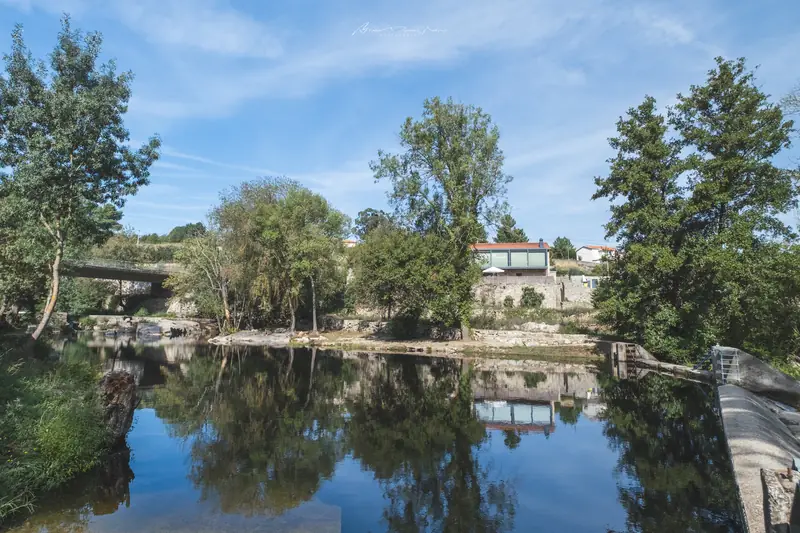
The Varosa widens into a weir pool between the medieval bridge and the newer road bridge, and that is where people swim in summer, in the shade of the trees on the bank. It is one of the most popular spots around when the heat sets in. The best of it is the combination: a swim, the climb up the Ucanha tower, and lunch a few steps away in Gouviães.
Good for: combining the swim with the tower and lunch in Gouviães, all five minutes apart on foot.
Good to knowIt is a river, not a pool, with no guaranteed lifeguard. Stay close with children
Parque Biológico da Serra das Meadas
Serra das Meadas, 7 km from Lamego
Fifty hectares of woodland in the hills above Lamego, with animals from the region: foxes, deer, fallow deer, wild boar, donkeys, horses, partridges, peacocks and water birds. Some enclosed, some roaming free. It is at its best in autumn, which is when the wild mushrooms the park is known for come out.
Good for: going in autumn, for the mushrooms. The park runs guided mycological walks.
Good to knowOpen since 2002, with an educational purpose. There are picnic spots and marked trails
Do not missThe Miradouro da Boa Vista on the way up, at 860 metres
On foot
The valley is best taken slowly, and there is a waymarked path linking all the monasteries.
Caminho dos Monges
From São João de Tarouca to the Douro
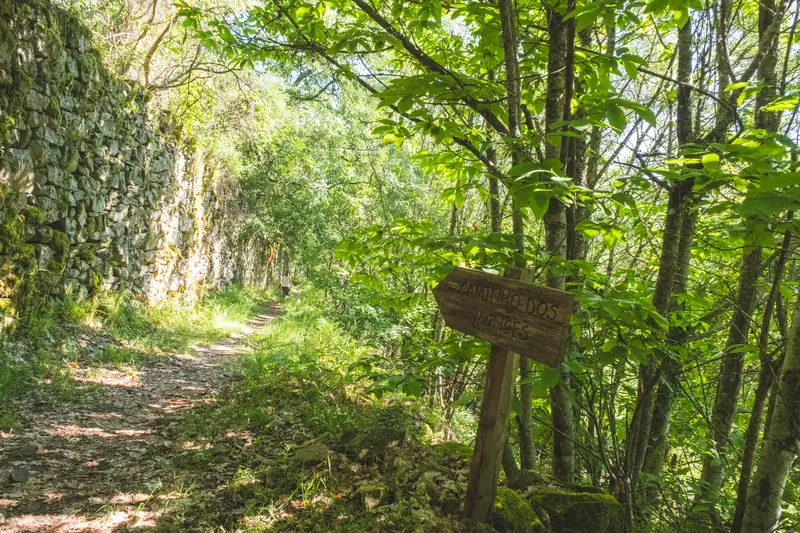
The valley's long-distance route, 42 kilometres retracing the path of the Cistercian monks: 23 in Tarouca and 19 in Lamego. It is not a loop, and it works best starting at São João de Tarouca, with the valley opening ahead of you rather than falling away behind. Taken gently, it is four days. It leaves São João de Tarouca and passes through Mondim da Beira, Tarouca, Dálvares, Ucanha and Salzedas. From there it follows the Varosa river to Lamego, and ends at the Douro, in Peso da Régua.
If you stay with us: the first stage from São João de Tarouca to the house, and the second from here to Salzedas, or as far as crossing the river at Vila Pouca de Salzedas.
Seven times of year when the region changes character. Worth knowing before you pick your dates.
The town's own festivals, in Tarouca
São Pedro in the last week of June, São Miguel on 29 September
Tarouca has two. São Pedro, in the last week of June, honours the patron saint of the parish. São Miguel, on 29 September, is the municipal holiday and brings the annual fair with it. In between there is also Santa Helena, on the second Sunday of July. These are street festivals five minutes on foot from the door, and on those nights quiet is not on the menu.
VarosaFest
Four nights in August, at the Parque Ribeirinho
Tarouca's music festival, which bills itself as the festival of Portugal's northern interior. It takes place at the Parque Ribeirinho by the river, four nights with camping, swimming by day and concerts at night. It is the event that brings the most outsiders to town, and tickets cost nothing like the big festivals.
The Várzea da Serra festivals
The first three Sundays of August
Three Sundays in a row, one after another: Santa Apolónia on the first, the Festa do Senhor on the second and Nossa Senhora da Saúde on the third. Várzea da Serra is the village where the Varosa river rises, high in the hills, and it is where you best understand what a real village pilgrimage is.
Nossa Senhora dos Remédios, in Lamego
From late August to 8 September, the day of the pilgrimage itself
It is one of the largest pilgrimages in Portugal, with more than four centuries behind it. Fourteen days of festivities end in the Procissão do Triunfo, which has paraded through Lamego for more than a hundred and thirty years, and the town fills up. If you come then, book tables several days ahead.
The grape harvest in the Douro
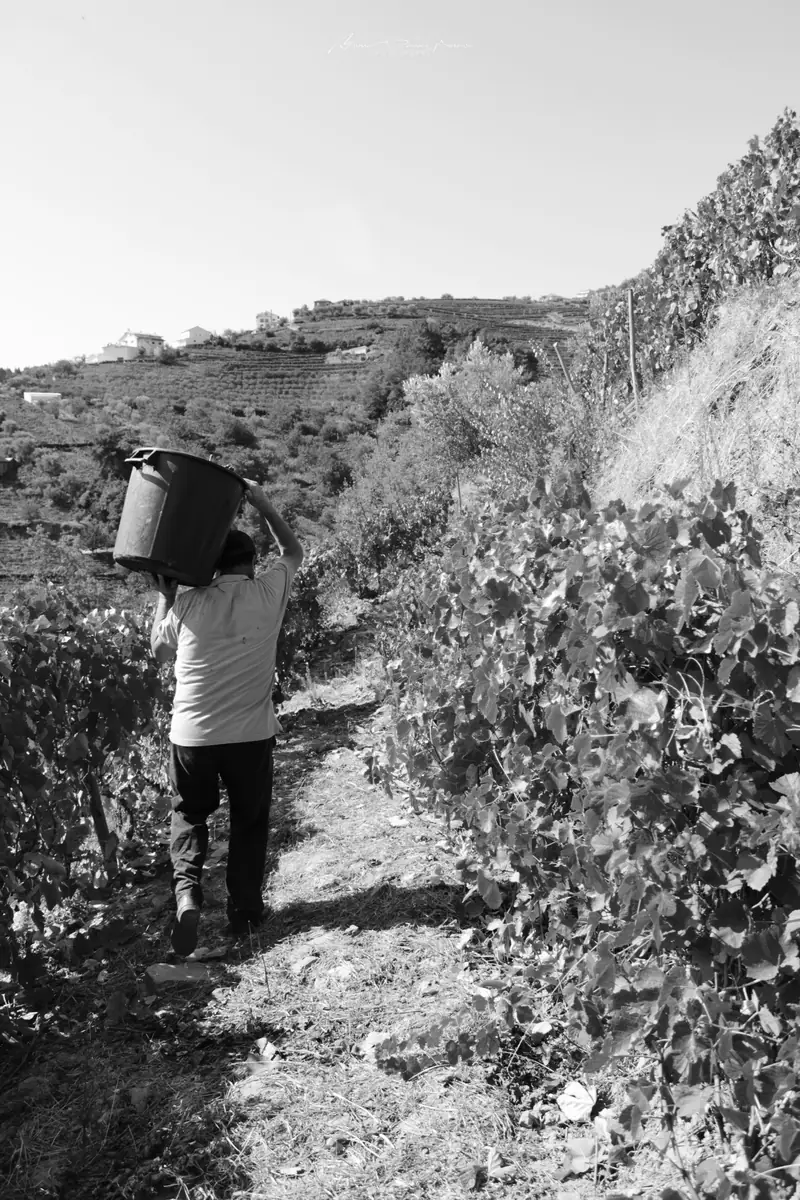
From late August to mid-October, peaking in September
In the weeks before, the vines are at their deepest green of the year, heavy bunches hanging from the terraces, and the valley looks freshly painted. Then comes the harvest, which lasts about six weeks and catches up the whole valley: white grapes first, then red, people on the terraces and tractors loaded with crates on the road. Many estates open their doors at this time, with programmes where you cut bunches, tread grapes in the stone lagar and have lunch with the vineyard workers. Places are few and sell out months ahead. If you would rather not pick, you still see it all along the N222 to Pinhão, or from the historic train, which is still running in these weeks.
The Douro in autumn
After the harvest, from mid-October into November
Once the grapes are in, the vines change colour, and it may well be the most beautiful time of year in the Douro. The terraces turn from green to yellow, orange and red, each grape variety at its own pace, and the slopes end up in stripes, like a patchwork quilt. With the valley's mild climate, the colours last for weeks. There are fewer people than in summer, the light is low and golden all day, and it is when the viewpoints at Casal de Loivos and Galafura are at their best. And closer to the house, on foggy mornings, climb the Serra de Santa Helena to see the Tarouca valley under a white sea.
Entrudo de Lazarim
At Carnival, in February or March depending on the year
Hand-carved alder masks, satirical testaments read out by the Comadre and the Compadre, and feijoada and flour broth served on Shrove Tuesday. It is one of the most genuine carnivals in the country, and the same tradition can be seen year-round at the Iberian Mask Museum.
Two things worth knowing
The Varosa monuments close on Mondays and in the early afternoon. The combined ticket for São João de Tarouca, Salzedas and Ucanha is valid for seven days and can be used once at each, so there is no need to do all three in one go.
The pools and the river beach are summer things. Outside that season, the Serra das Meadas wildlife park and the trails will fill a day, and with nobody about.